
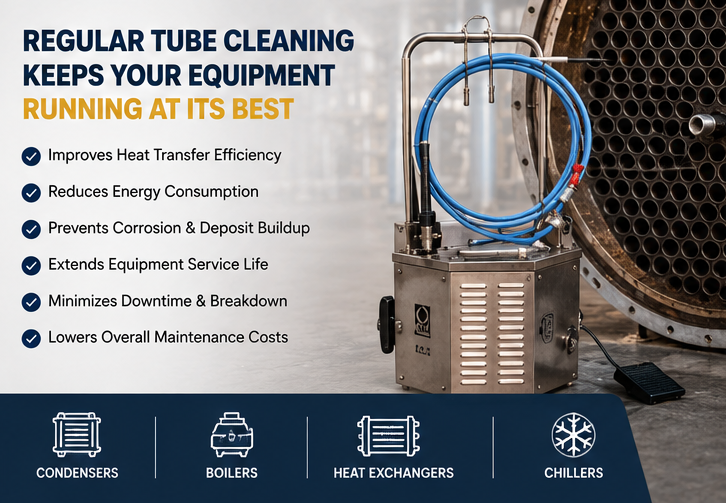
Industrial equipment such as condensers, boilers, heat exchangers, and chillers operates efficiently only when its tubes remain clean and free from deposits. During normal operation, scale, rust, sludge, biological growth, and other contaminants gradually accumulate inside the tubes. These deposits reduce heat transfer efficiency, restrict fluid flow, and increase energy consumption. Regular maintenance using Tube Cleaners is one of the most effective ways to prevent these problems. Planned Tube Cleaning helps industries improve equipment performance, reduce unexpected downtime, and extend the service life of valuable assets.
A preventive maintenance approach not only improves operational reliability but also helps industries reduce maintenance expenses over the long term.
Why Regular Tube Cleaning Is Essential
Tube fouling develops gradually during everyday industrial operations. Even a small amount of scale or sludge can reduce equipment efficiency and increase operating costs. If cleaning is delayed, deposits become harder to remove and may eventually lead to equipment failure.
Regular maintenance removes these contaminants before they become serious problems. It allows industrial systems to continue operating at their designed performance while reducing unnecessary stress on equipment components.
Instead of waiting for equipment performance to decline, industries benefit more from scheduled maintenance programs that keep tubes clean throughout the operating cycle.
Improves Heat Transfer Efficiency
One of the biggest advantages of regular tube maintenance is improved heat transfer.
Clean tubes allow heat to move efficiently between process fluids, reducing energy losses and improving equipment performance. Whether the equipment is a condenser, boiler, heat exchanger, or chiller, clean tubes help maintain stable operating temperatures and improve overall system efficiency.
A modern Tube Cleaner Machine helps remove deposits consistently while protecting the internal surface of the tubes.
Reduces Energy Consumption
Dirty tubes require more energy because equipment must work harder to achieve the required operating conditions.
Regular cleaning restores normal heat transfer and fluid circulation, allowing industrial systems to consume less fuel and electricity. Lower energy consumption not only reduces operating costs but also improves overall plant efficiency.
This is one of the primary reasons industries include tube cleaning in their preventive maintenance schedules.
Extends Equipment Service Life
Industrial equipment represents a significant investment, making long-term reliability an important objective.
Routine maintenance prevents excessive corrosion, overheating, and deposit buildup that may damage tube surfaces over time. Keeping tubes clean reduces unnecessary mechanical stress and helps equipment operate under normal design conditions.
Regular maintenance there fore contributes to a longer operating life and fewer major repairs.
Improves Equipment Reliability
Unexpected equipment failures often occur because deposits are allowed to accumulate inside the tubes for extended periods.
Routine cleaning helps maintain stable equipment performance while reducing the likelihood of emergency shutdowns. Reliable operation also improves production planning and minimizes disruptions to industrial processes.
Facilities that perform preventive maintenance generally experience fewer operational interruptions than those relying only on corrective maintenance.
 77Please respect copyright.PENANAXnxcR4ip8y
Benefits Across Different Industrial Applications
Different industrial systems require different cleaning approaches, but all benefit from regular maintenance.
Condenser Maintenance
Condenser Tube Cleaners remove scale, algae, and biological fouling that reduce cooling efficiency. Using a dedicated Condenser Tube Cleaning Machine helps restore heat transfer performance while improving condenser reliability.
Boiler Maintenance
Industrial boilers continuously operate under high temperatures, making regular cleaning essential. Boiler Tube Cleaners remove soot, ash, and mineral deposits that reduce thermal efficiency. A reliable Boiler Tube Cleaning Machine supports improved steam generation, lower fuel consumption, and safer boiler operation.77Please respect copyright.PENANAlOmUt7H6ZL
Heat Exchanger Maintenance
Heat exchangers often process fluids containing minerals and chemical residues. Heat Exchanger Tube Cleaners remove fouling that reduces thermal performance. A professional Heat Exchanger Tube Cleaning Machine helps restore efficient heat transfer and supports continuous industrial production.

Chiller Maintenance
Industrial cooling systems also require regular maintenance. A Chiller Tube Cleaner removes deposits from condenser and evaporator tubes that reduce cooling capacity. Using a suitable Chiller Tube Cleaning Machine helps maintain energy-efficient cooling performance and reliable HVAC operation.
Reduces Maintenance Costs
Preventive maintenance is generally more economical than repairing damaged equipment after a failure occurs.
Regular tube cleaning minimizes emergency repairs, reduces replacement part requirements, and shortens maintenance shutdowns. It also improves maintenance planning by allowing inspections and cleaning to be completed during scheduled service intervals.
Over time, these improvements contribute to lower overall maintenance costs.
Selecting the Right Tube Cleaning Equipment
Effective maintenance depends on using equipment that matches the application requirements. Tube diameter, deposit type, tube material, and operating conditions should all be considered when selecting cleaning equipment.
Many industries work with experienced Tube Cleaning Machine manufacturers to identify the most suitable cleaning solutions for their maintenance programs. Proper equipment selection improves cleaning quality while helping protect valuable industrial assets.
Modern Tube Cleaning Equipments are available for a wide range of industrial applications, allowing maintenance teams to achieve consistent cleaning performance across different systems.
Best Practices for Regular Tube Maintenance
To maximize equipment performance, industries should follow a structured maintenance program.
Recommended practices include:
- Schedule routine tube inspections.
- Perform cleaning before heavy deposits develop.
- Select the correct cleaning accessories.
- Inspect tube condition after each cleaning cycle.
- Maintain cleaning equipment properly.
- Follow manufacturer operating recommendations.
- Keep maintenance records for future inspections.
Following these practices improves cleaning efficiency and supports long-term equipment reliability.
Conclusion
Regular maintenance using Tube Cleaners is essential for maintaining industrial equipment performance and operational reliability. Scheduled Tube Cleaning improves heat transfer, reduces energy consumption, minimizes downtime, and extends equipment service life. Whether maintaining condensers, boilers, heat exchangers, or chillers, preventive maintenance delivers measurable operational benefits. Using the right Tube Cleaner Machine, application-specific cleaning solutions, and modern Tube Cleaning Equipments helps industries achieve efficient maintenance while supporting long-term productivity and dependable plant performance. Working with experienced Tube Cleaning Machine manufacturers also helps ensure that the selected cleaning solution matches the specific requirements of each industrial application.
ns216.73.216.202da2


 and then Add to home screen.